Gallery
Three league tables from three web pages, in one app — then read again without AI
The numbers you check every week live on different sites: one league here, another there, the supplier portal you sign in to every Monday. Asking an AI helps once — and next week it is the same question again.
How it was made
This is the whole request, exactly as it was typed into Bohm. Copy it and you can make the same app.
“Put the league tables from the three open pages on one screen — one card per league, nicely laid out.”
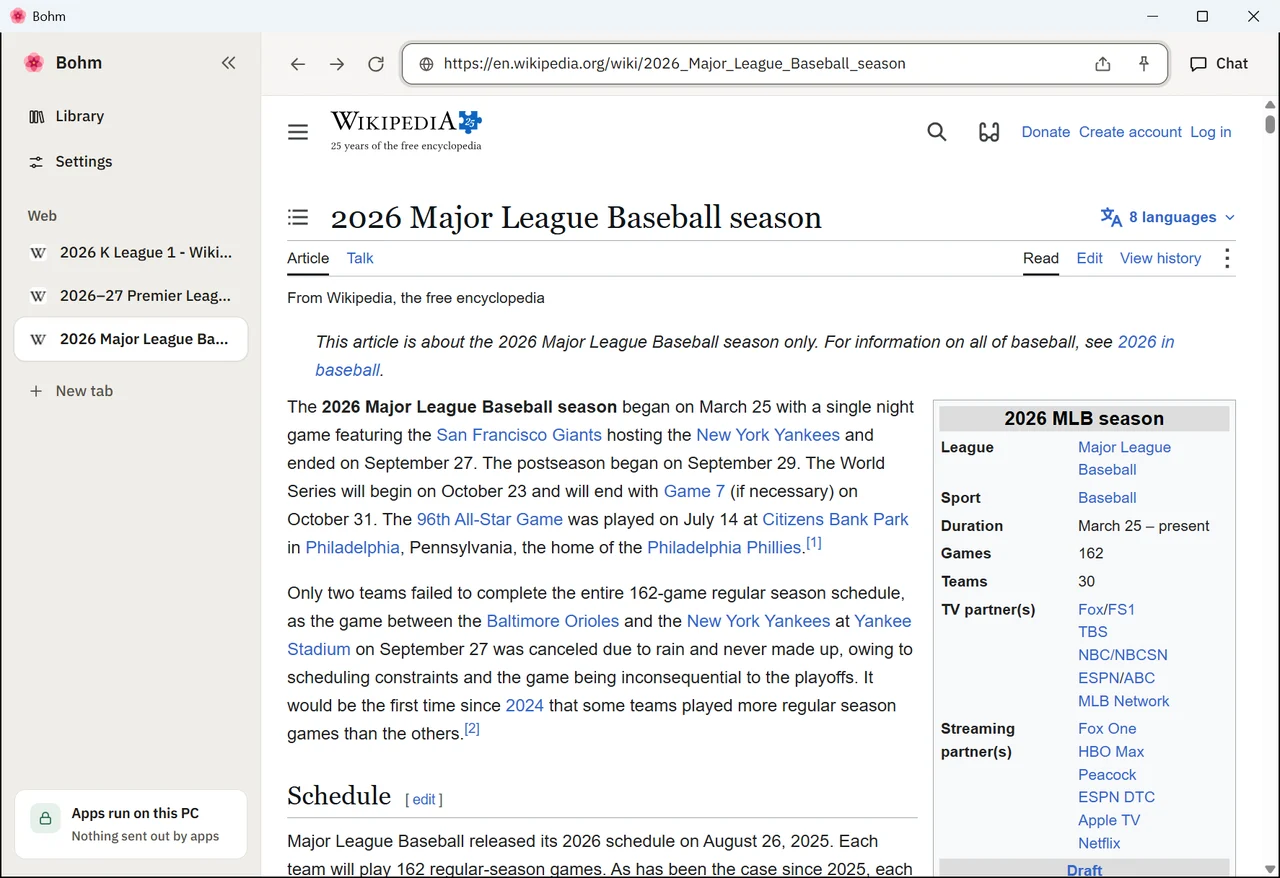
Open the pages you already use.
Open each page in a web tab in Bohm — signed in as usual where a site needs it. Here: three league pages on Wikipedia.
Ask once.
Type the request into the chat beside your tabs. It reads the open pages, brings the tables together on one page, and lists the pages it read.
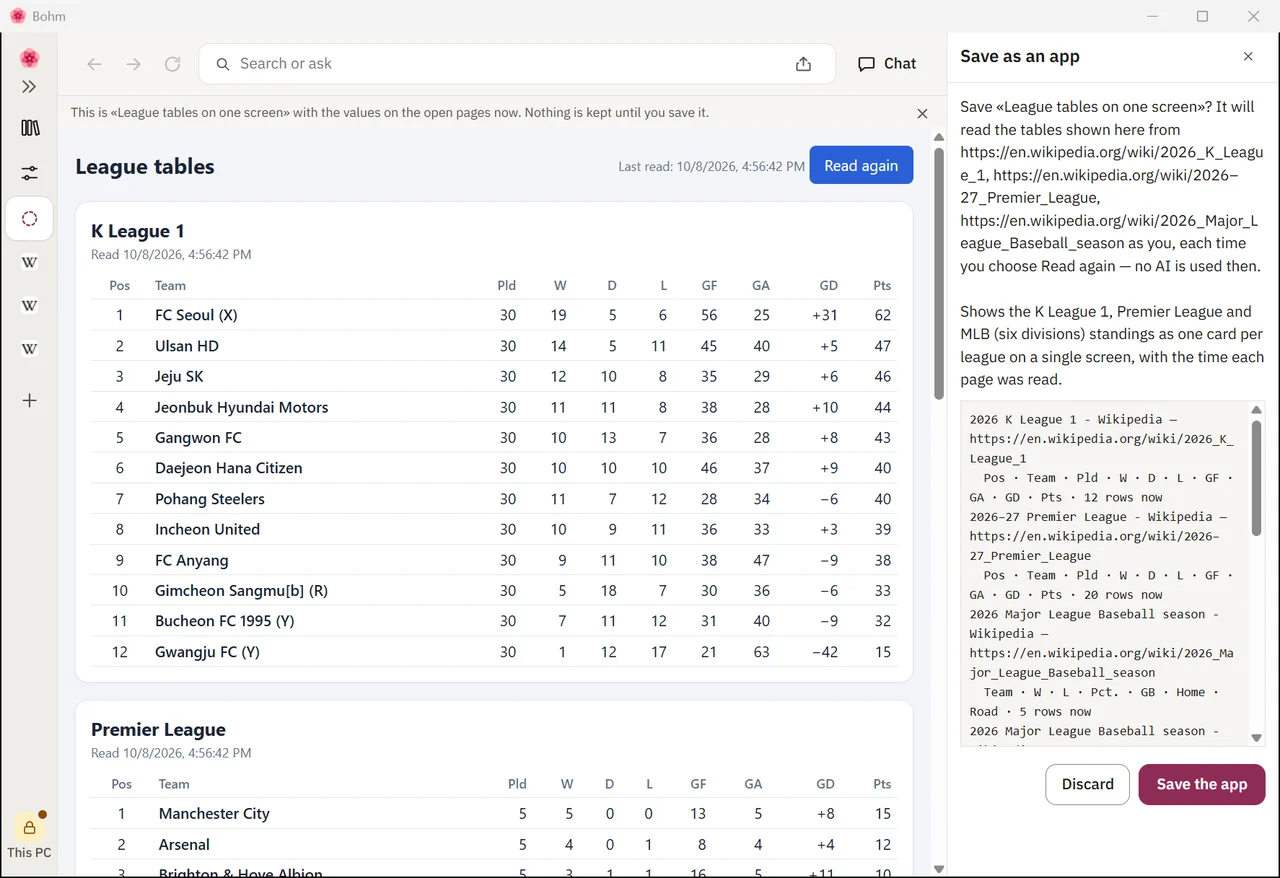
Save it as an app — and see what it will read.
Choose “Save as app”. Bohm shows the app with today’s values and exactly which pages and columns it will read, and nothing is kept until you agree.
How it is used
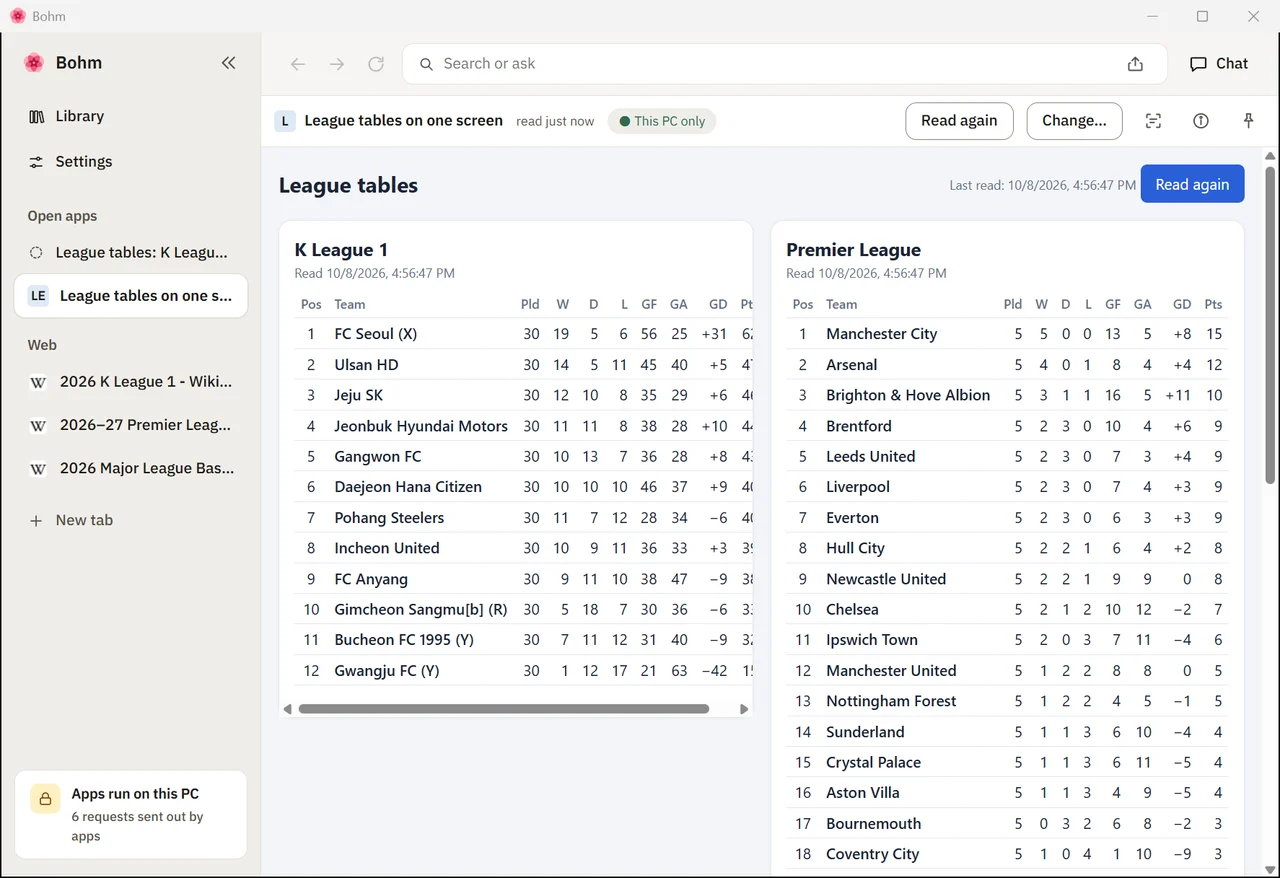
Everything on one screen.
The saved app shows each league as a card, with when and where it was read.
Read again — without AI.
Next time, open the pages and choose “Read again”. Bohm reloads them and reads the same tables with the same rules. No AI is involved, so it works with none connected — and tells you if a page changed shape.
Point at what should change.
Point at a table and ask for the first place to stand out. The new version arrives as a suggestion; the readings stay.
Why an app in your browser, not an app builder?
It reads as you. An app builder runs on someone else’s server. To see a page behind your sign-in it needs your password, an API key or an integration someone has to build. Bohm’s app reads the tab you already have open — your login never leaves the browser.
Any page with a table. No API, no export button, no connector list. If you can see the table in a tab, the app can read it.
The rows stay with you. What it reads is kept in the app’s folder on your PC, with the time it was read and where from.
AI once, not every time. The AI makes the app once. Reading again follows fixed rules, so the same page gives the same table — and works with no AI at all.
Try this app
Download the app as a Bohm package and open it in Bohm — it starts with the example data shown above.
Install Bohm.
Free on Windows 10 and 11, without administrator rights.
Open the .bohm file.
Double-click it, or drop it on Bohm’s library. Before anything is added, Bohm shows what the app is and what it asks to do.
Use it, change it, or start over.
The example data is yours to delete. To make the app your own, point at a part and say what should change.
The package holds this app with the tables it read in the film. To read them again, open the same three Wikipedia pages in Bohm and choose “Read again” — no AI needed.
Made the same way
- Prices and delivery dates across supplier portals you sign in to
- This week’s figures from several dashboards you check
- Course or event schedules spread over many pages
- Exchange rates or fuel prices from public pages, kept as a history
More apps in the gallery
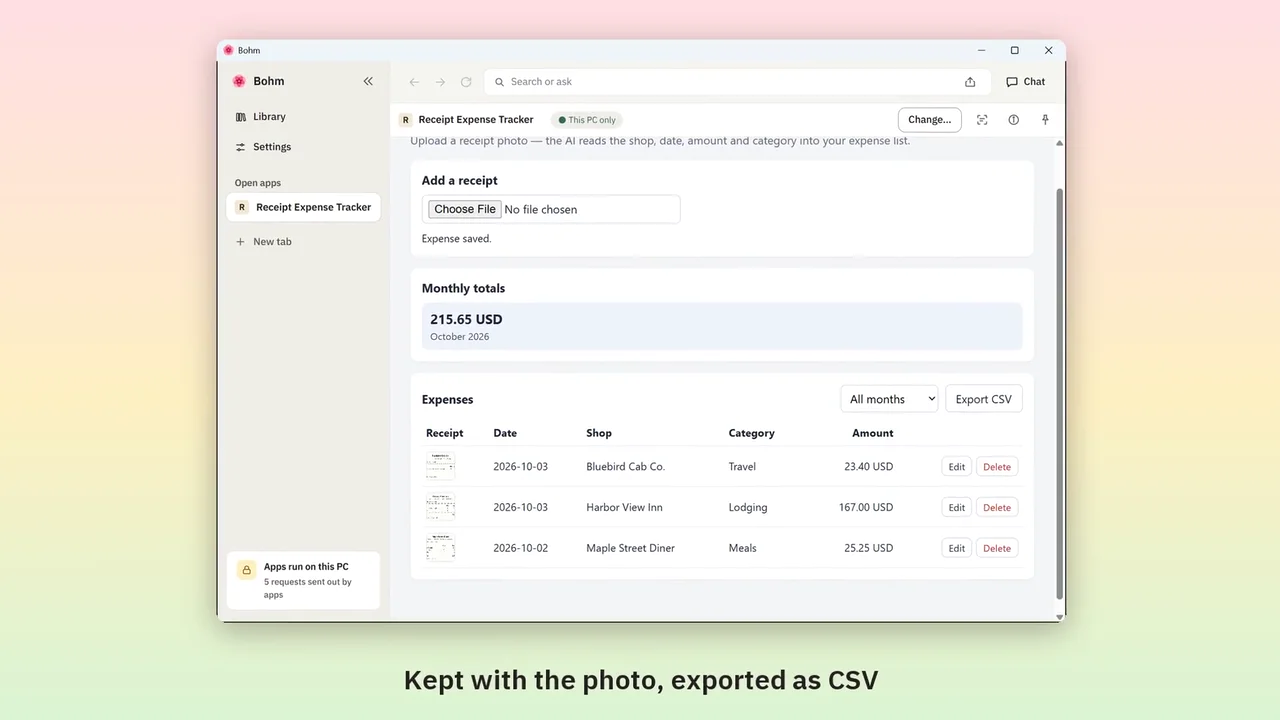
Receipt photos into an expense list
Upload a receipt photo; the AI fills in shop, amount and category. Monthly totals and a CSV for work.
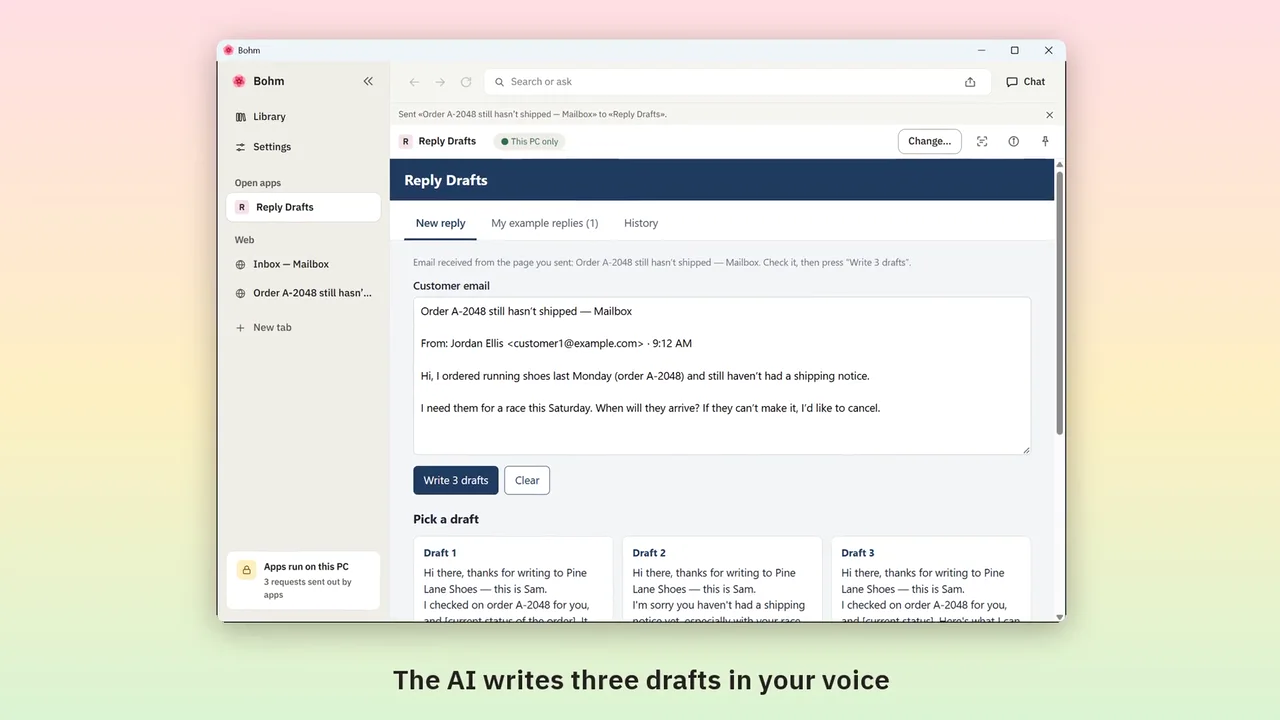
Customer emails into reply drafts
Send a customer email from your webmail; get three drafts in the way you write.
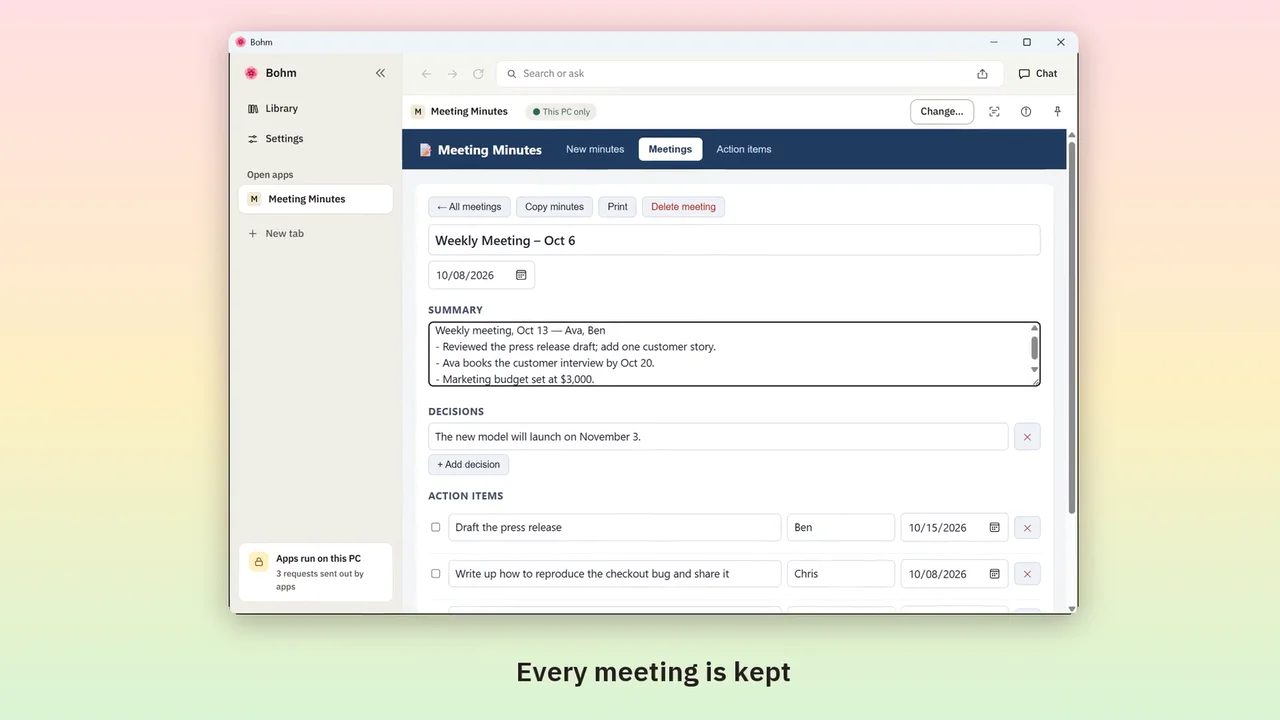
Meeting notes into minutes and action items
Paste rough notes; the AI writes minutes and gathers every action item, with owners and dates.
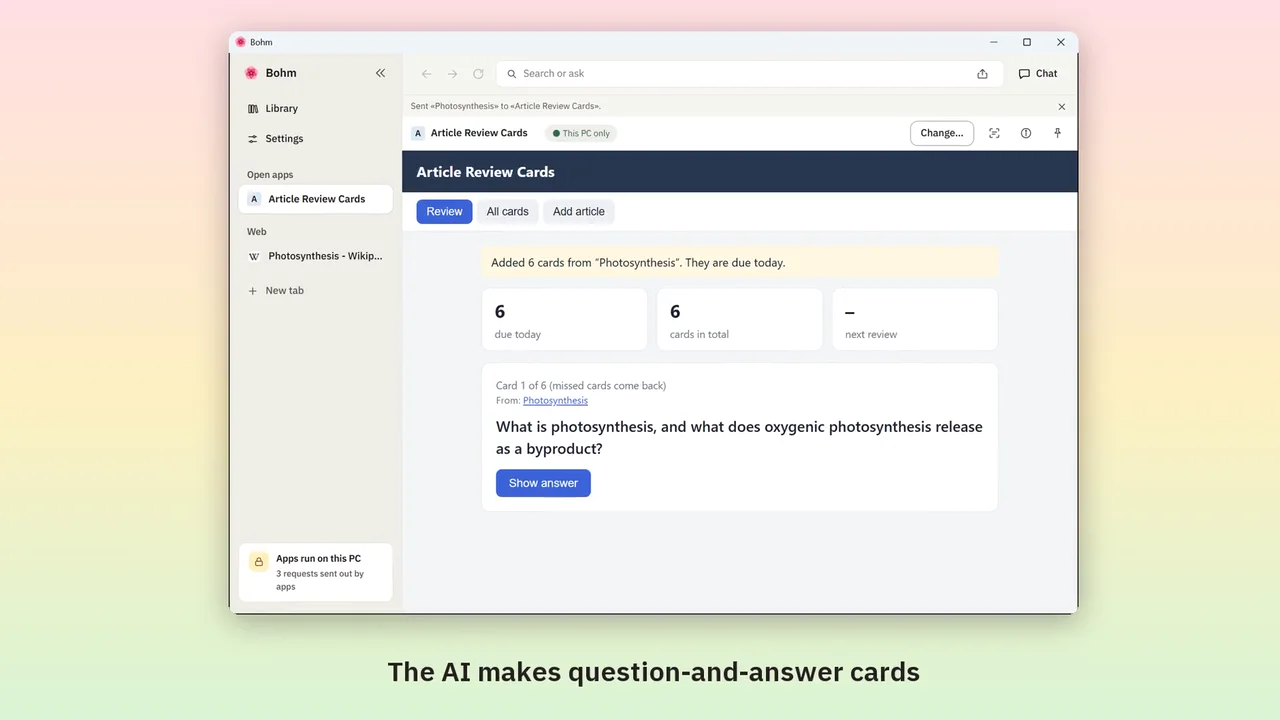
Web articles into review cards
Send an article from its tab; the AI makes question-and-answer cards, due on a schedule.
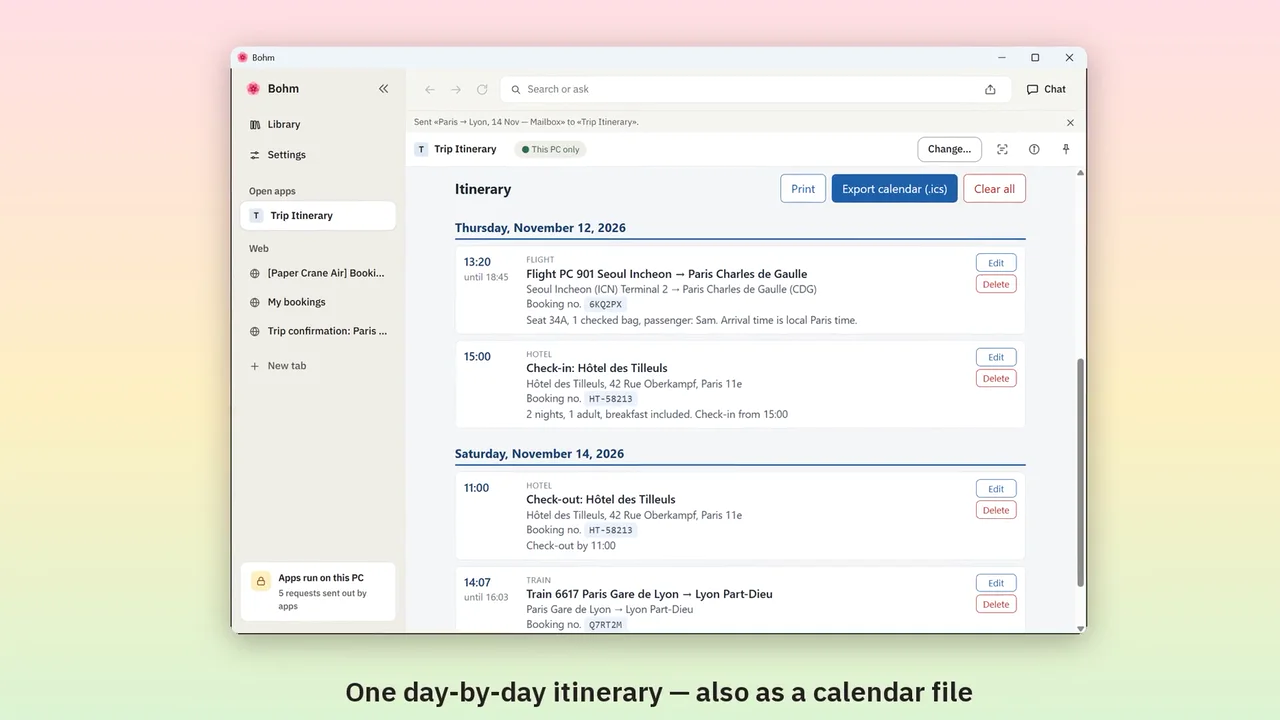
Booking confirmations into an itinerary
Send booking emails and pages from their tabs; get one day-by-day itinerary and a calendar file.
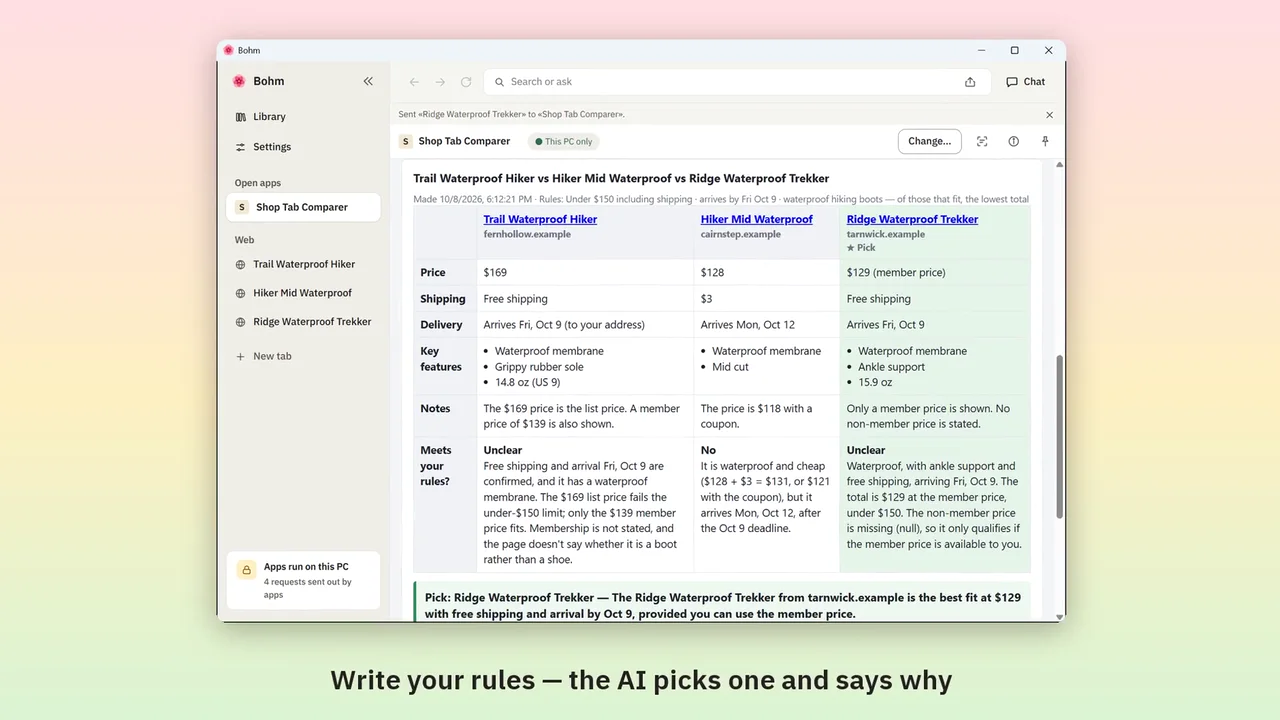
Product pages into one comparison
Send product pages from their tabs — member prices included — and get a table and a reasoned pick.
Try it with the app you need.
Bohm is free on Windows 10 and 11. It installs without administrator rights and works without an internet connection.