Gallery
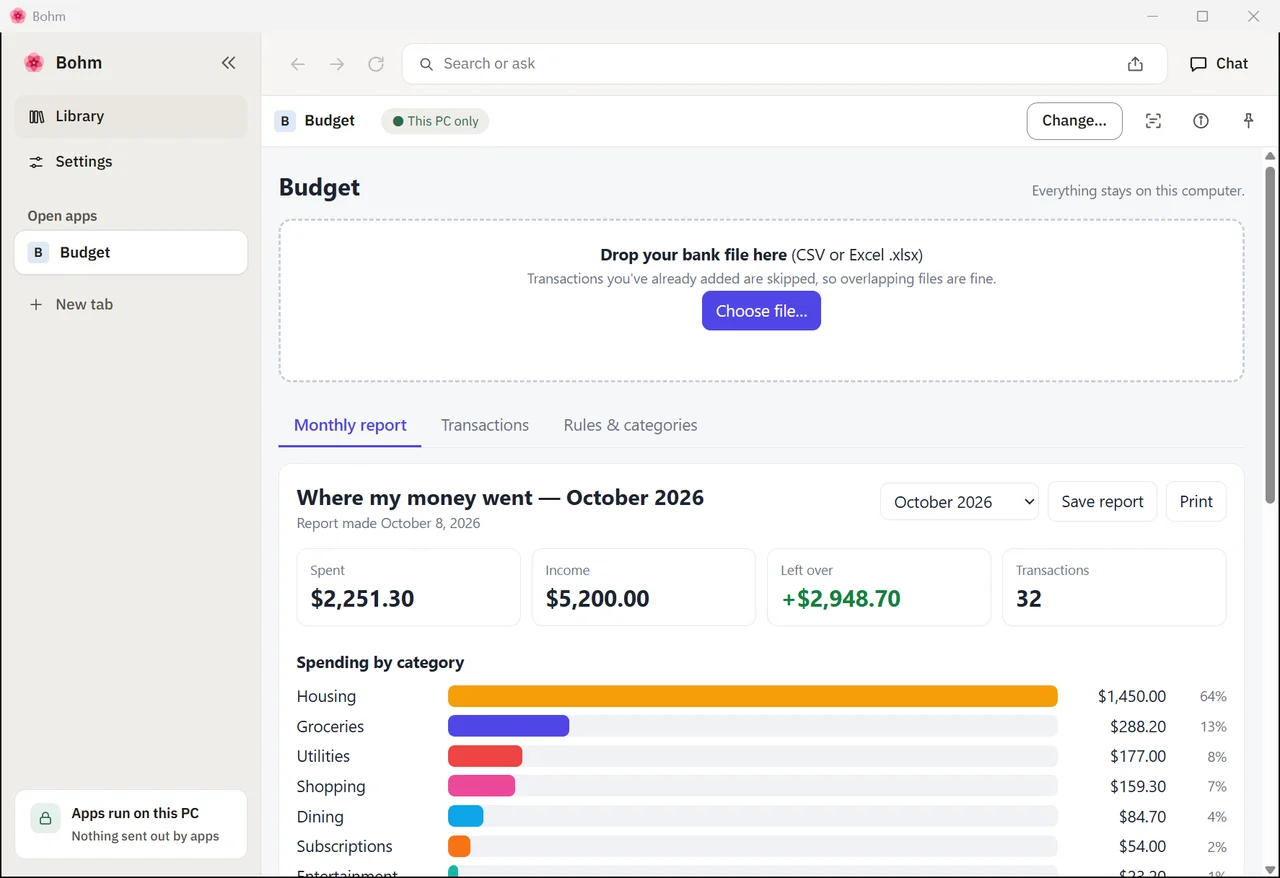
Drop in the file your bank gives you — the AI sorts it once, and next month the same rules work without AI
Budget apps want your bank login, and when one shuts down your history goes with it. The spreadsheet route means copying rows by hand every month and sorting the same coffee shop into the same category again.
How it was made
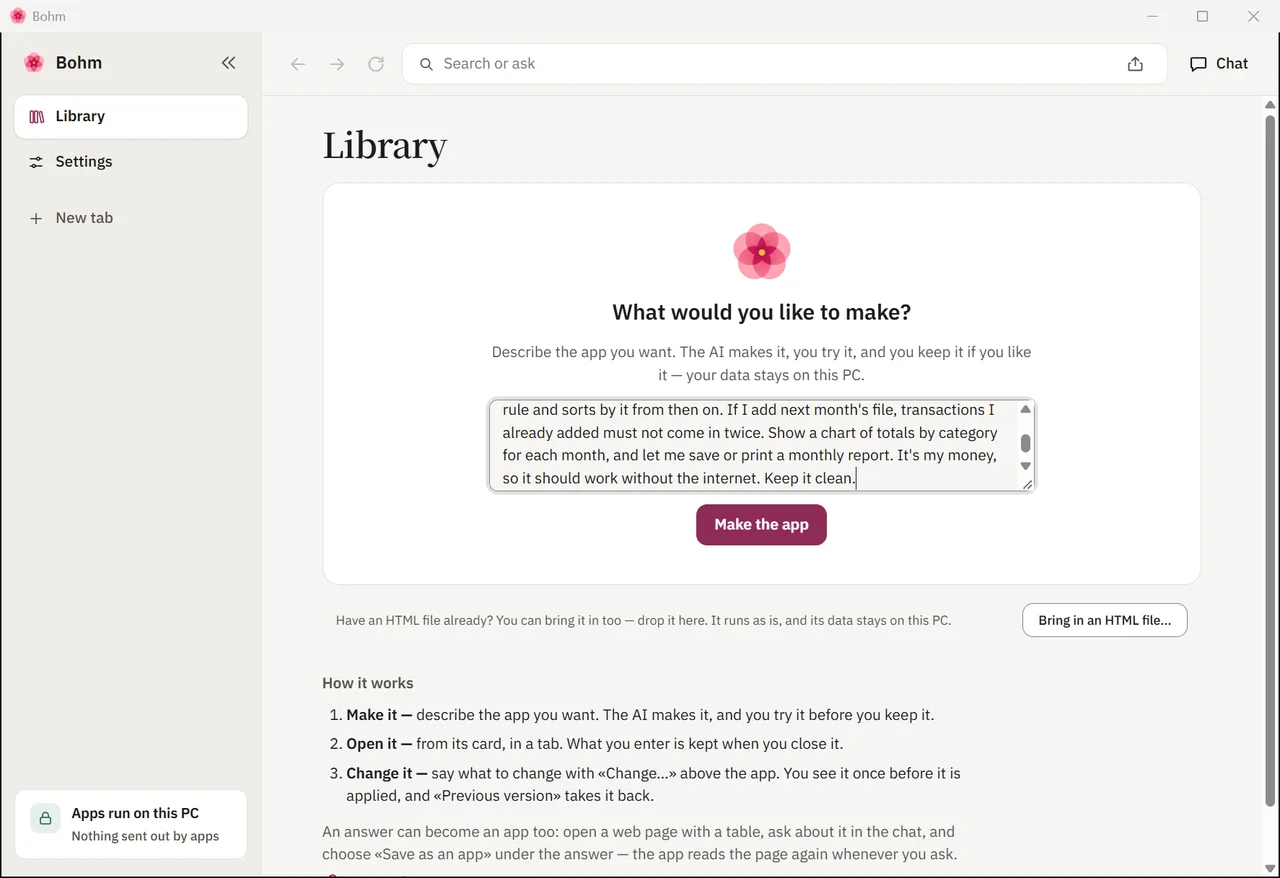
This is the whole request, exactly as it was typed into Bohm. Copy it and you can make the same app.
“Make me a budget app: I drop in the transaction file I download from my bank (Excel or CSV) and it sorts my spending into categories and shows where my money went each month. The AI suggests the category from the merchant name the first time; when I correct one, it remembers that rule and sorts by it from then on. If I add next month's file, transactions I already added must not come in twice. Show a chart of totals by category for each month, and let me save or print a monthly report. It's my money, so it should work without the internet. Keep it clean.”
Say what you need.
Type the app into “What should we make?”.
Watch it being written.
The AI writes the app; you can follow along.
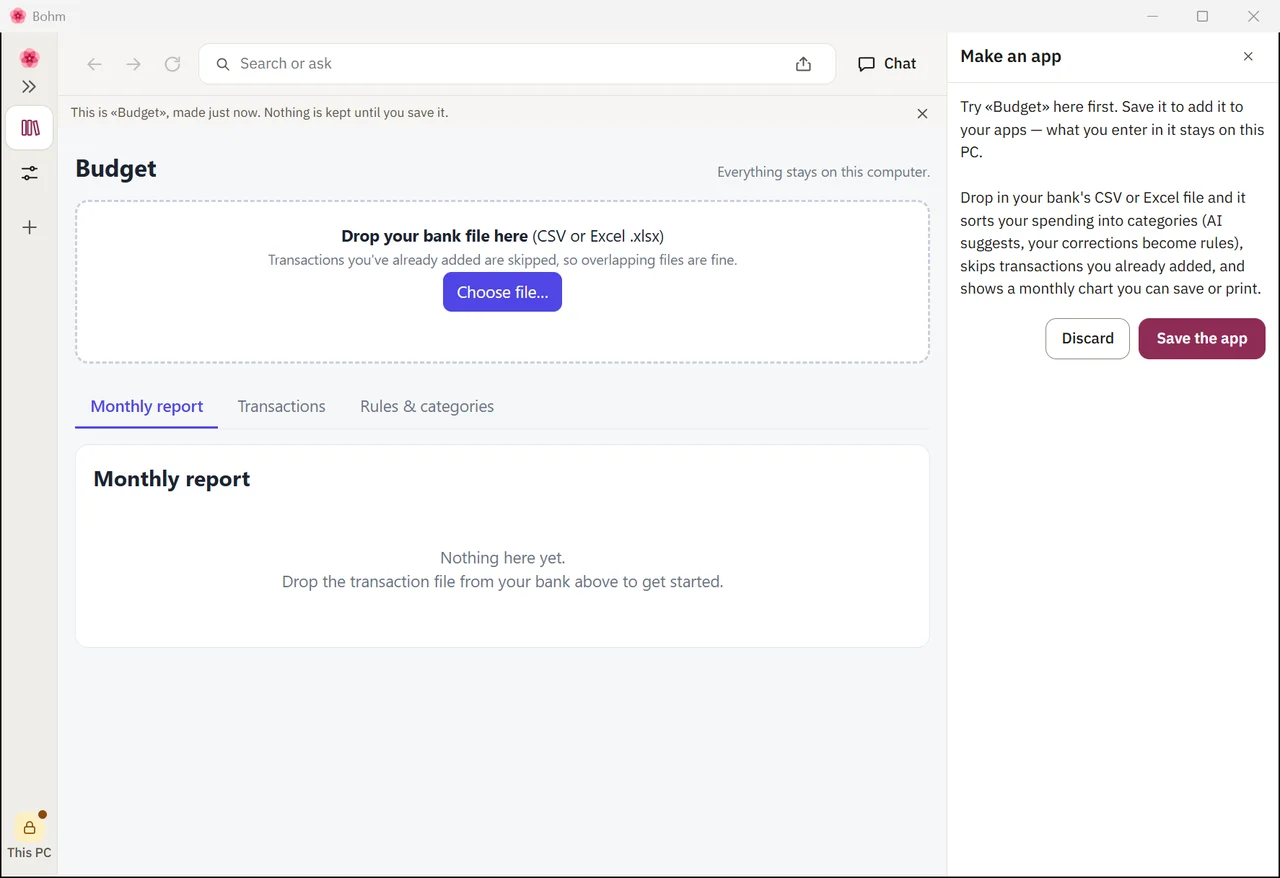
Try it, then keep it.
Nothing is kept until you save it.
How it is used
Drop in the bank’s file.
The Excel file as the bank gives it, header lines and all. The app finds the columns, shows what it will add, and asks the AI you connected to sort the merchants.
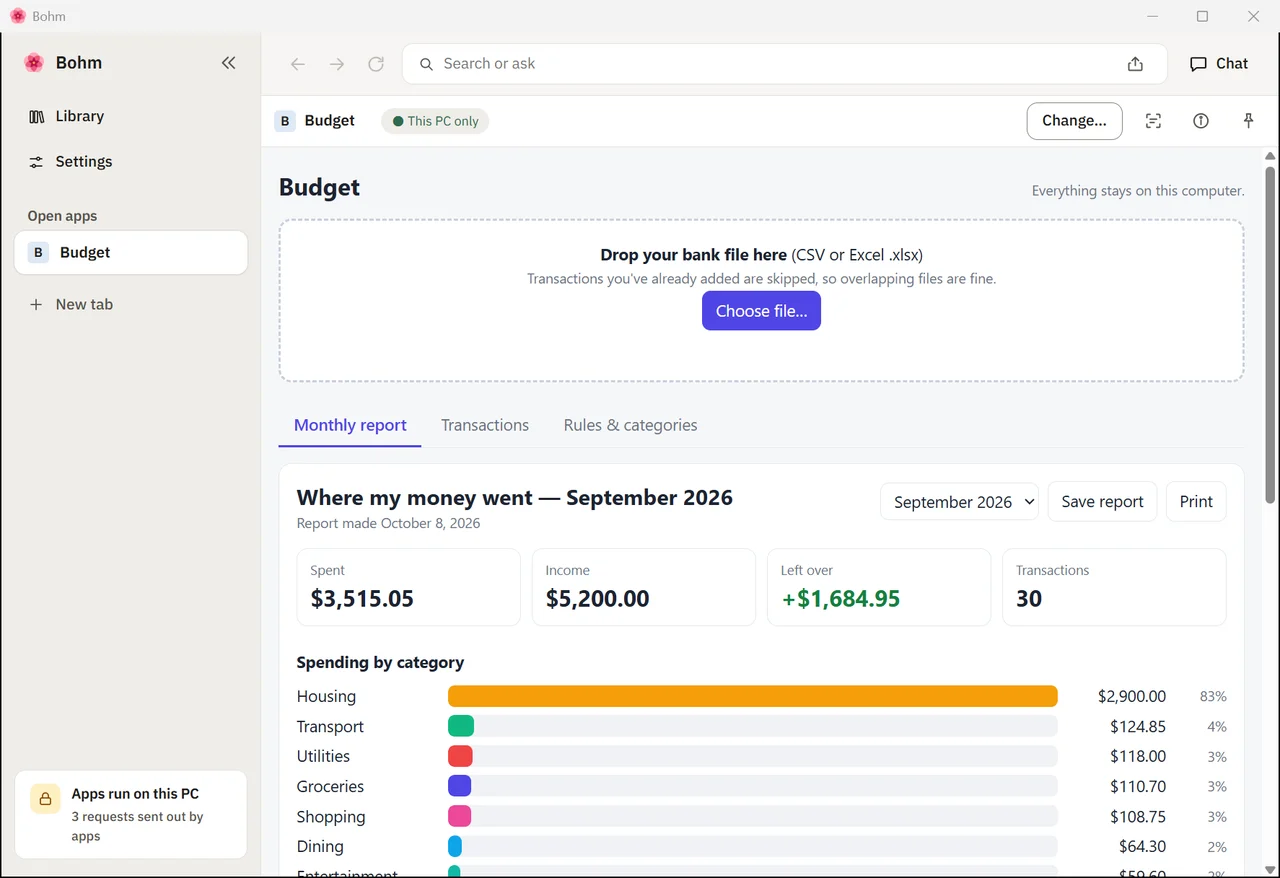
Where the money went.
Spending by category for the month, with a chart.
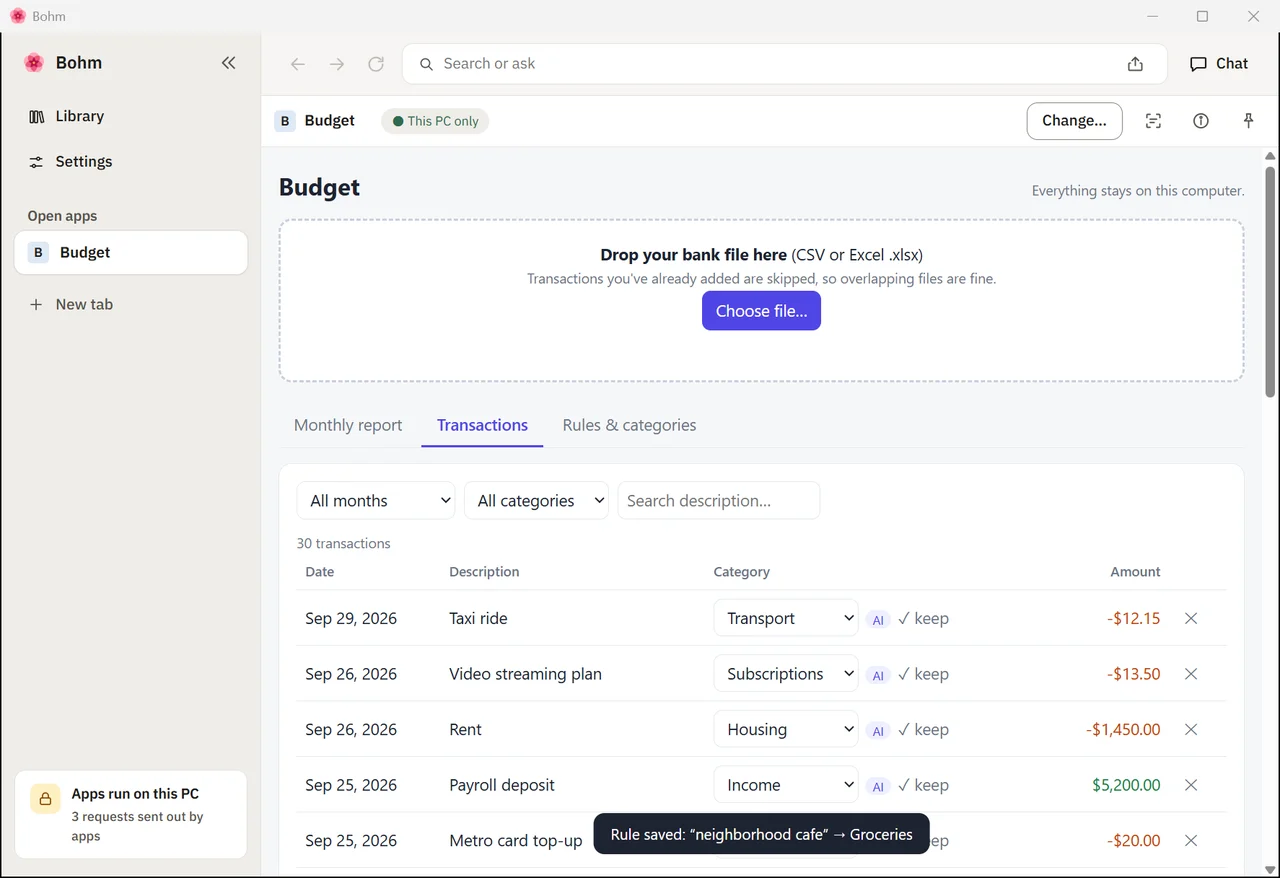
Correct one, keep the rule.
Change a merchant’s category once; the app remembers it for every month after.
Next month, no AI.
With the AI disconnected, next month’s CSV goes in: the overlapping day is skipped, and every merchant it has seen is sorted by its rules.
Point at what should change.
Point at the totals and ask for a budget per category. The months you kept stay.
Try this app
Download the app as a Bohm package and open it in Bohm — it starts with the example data shown above.
Install Bohm.
Free on Windows 10 and 11, without administrator rights.
Open the .bohm file.
Double-click it, or drop it on Bohm’s library. Before anything is added, Bohm shows what the app is and what it asks to do.
Use it, change it, or start over.
The example data is yours to delete. To make the app your own, point at a part and say what should change.
The package holds this app with the two made-up months from the film. Sorting merchants it has not seen needs an AI connected in Bohm’s settings; everything else works without one.
What it uses
Made the same way
- Card statements into shared household costs
- Payroll exports into a cost-per-project sheet
- Sales exports into a weekly report
- Utility bills into a yearly comparison
More apps in the gallery
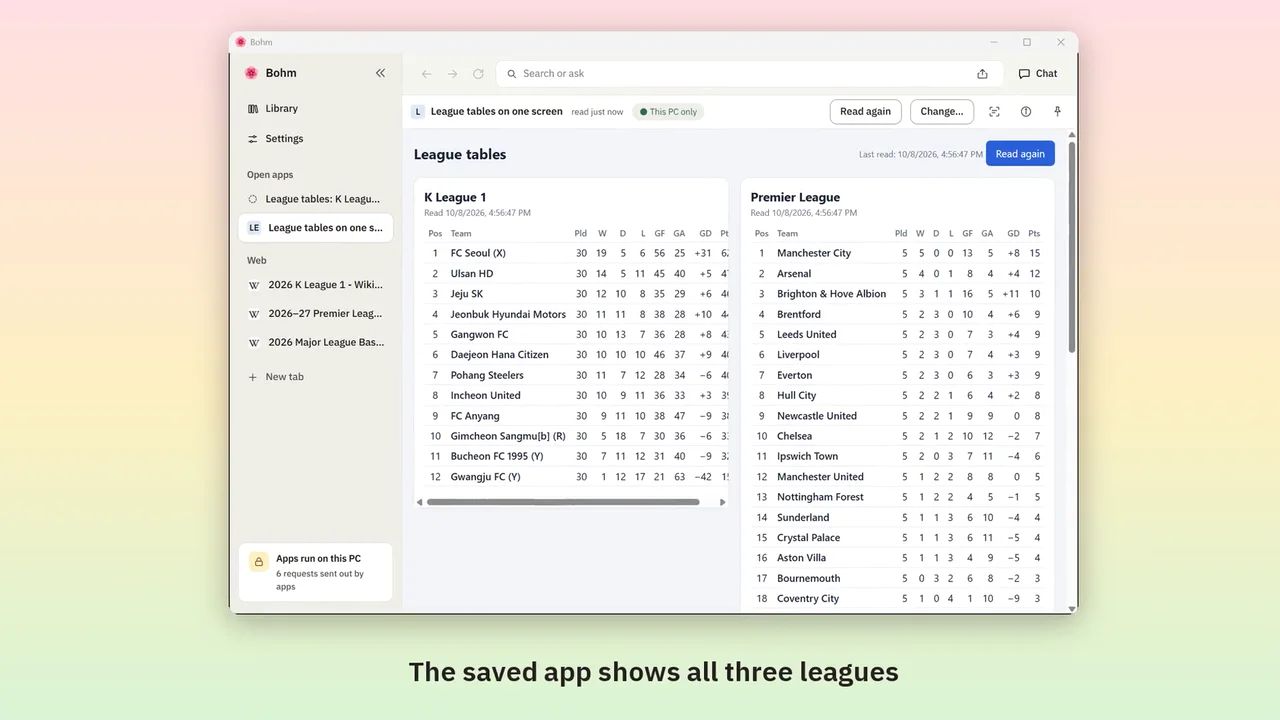
Web page tables into one app
Bring tables from several sites together once — then read them again in one click, without AI.
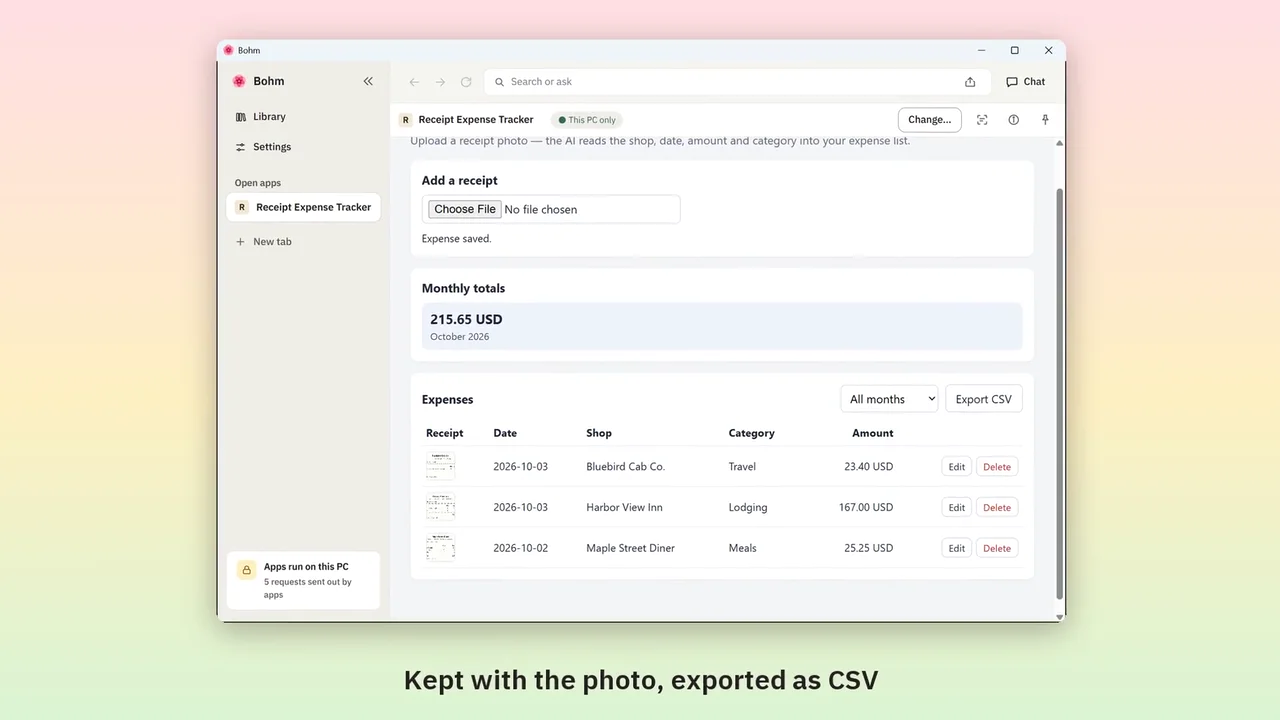
Receipt photos into an expense list
Upload a receipt photo; the AI fills in shop, amount and category. Monthly totals and a CSV for work.
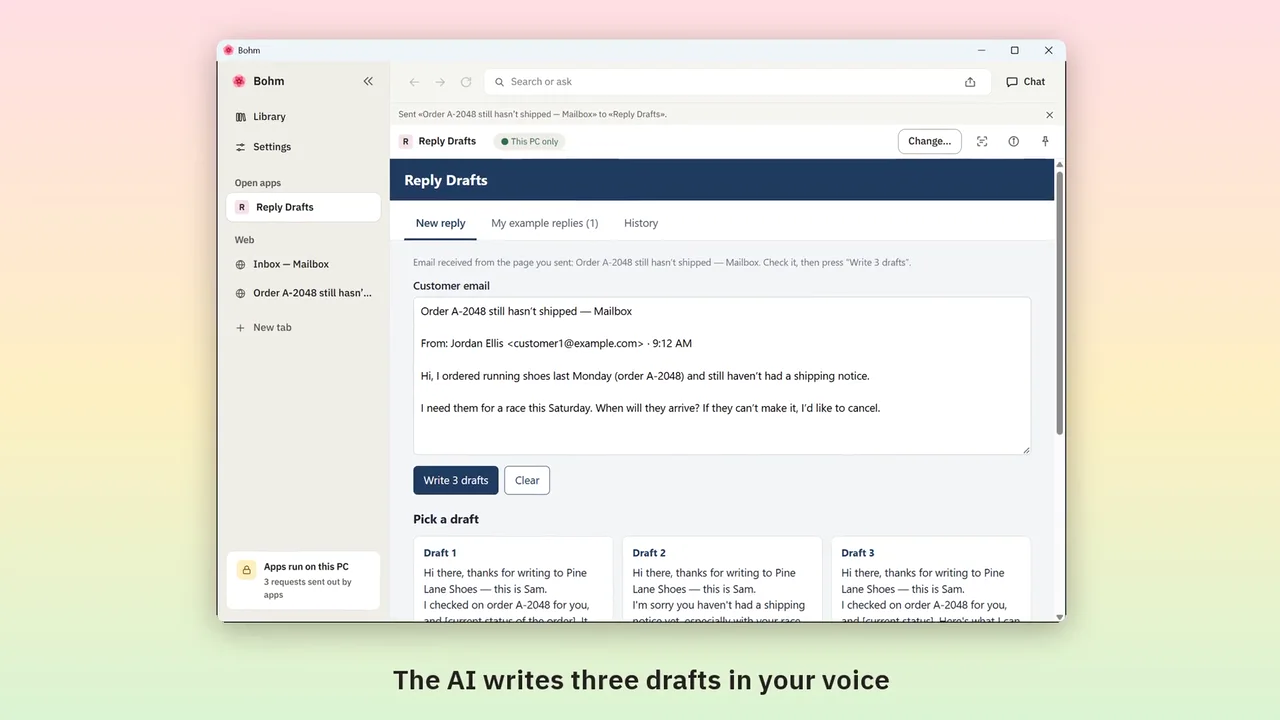
Customer emails into reply drafts
Send a customer email from your webmail; get three drafts in the way you write.
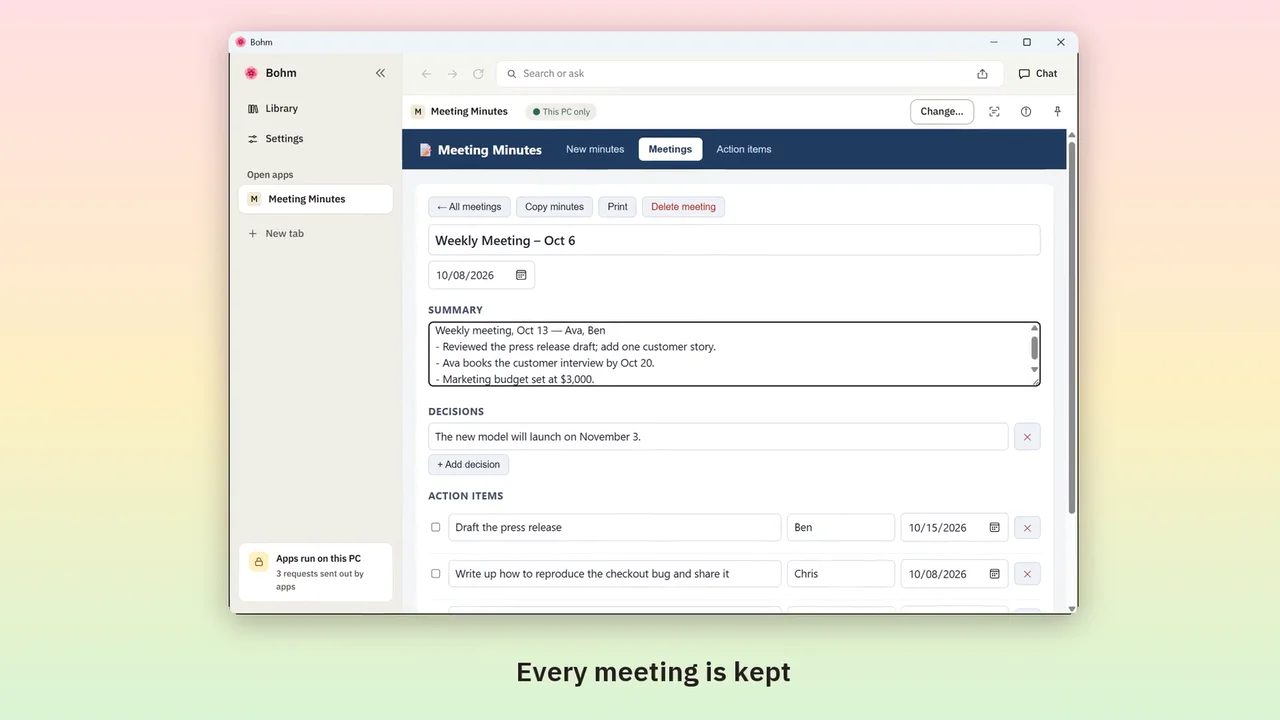
Meeting notes into minutes and action items
Paste rough notes; the AI writes minutes and gathers every action item, with owners and dates.
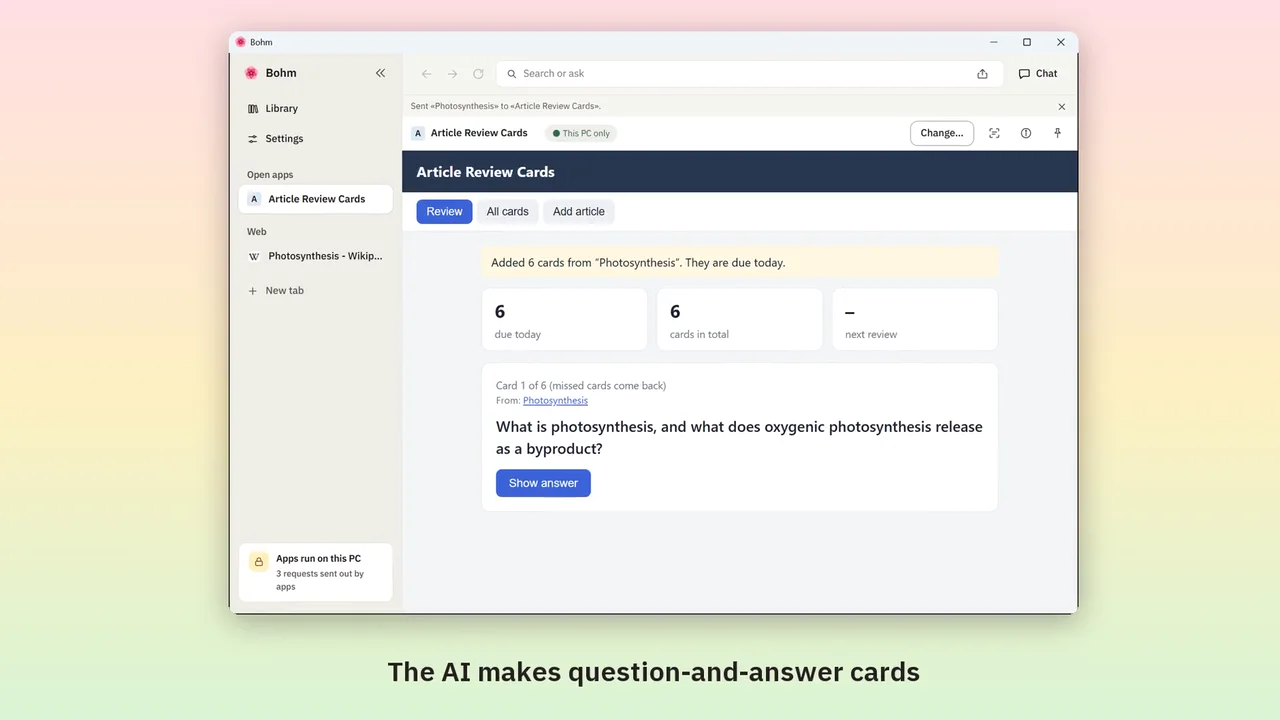
Web articles into review cards
Send an article from its tab; the AI makes question-and-answer cards, due on a schedule.
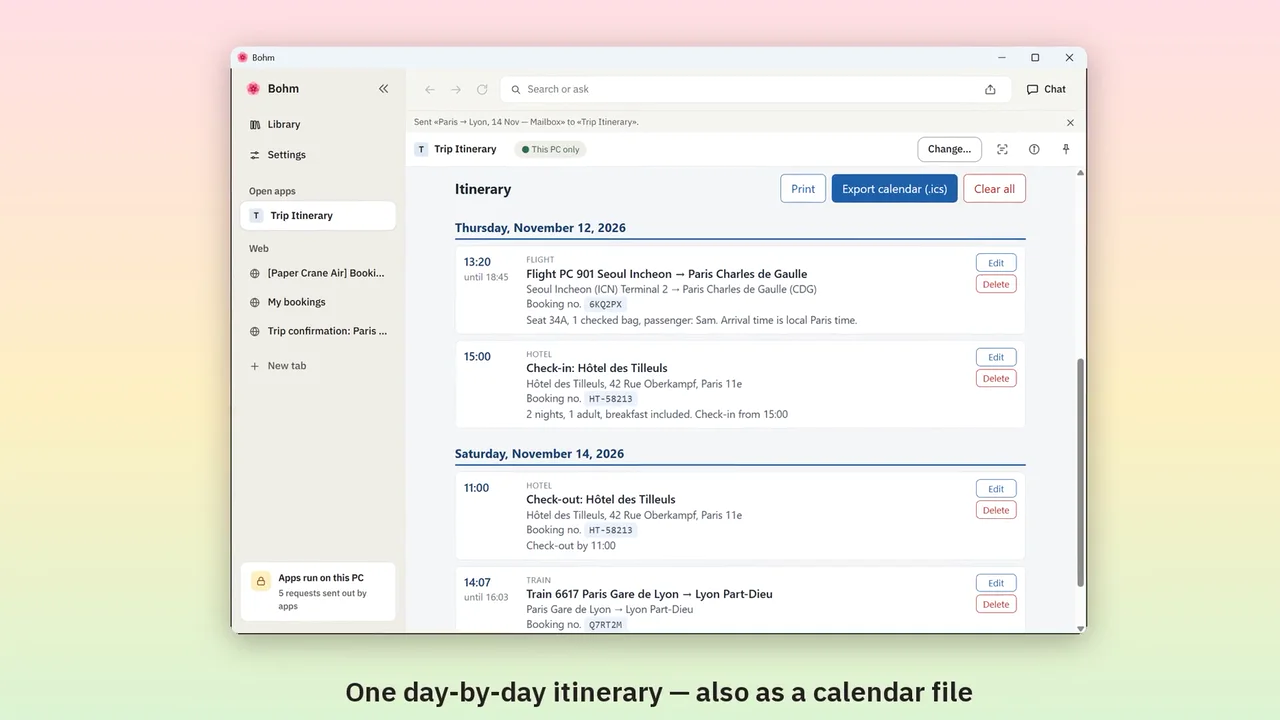
Booking confirmations into an itinerary
Send booking emails and pages from their tabs; get one day-by-day itinerary and a calendar file.
Try it with the app you need.
Bohm is free on Windows 10 and 11. It installs without administrator rights and works without an internet connection.